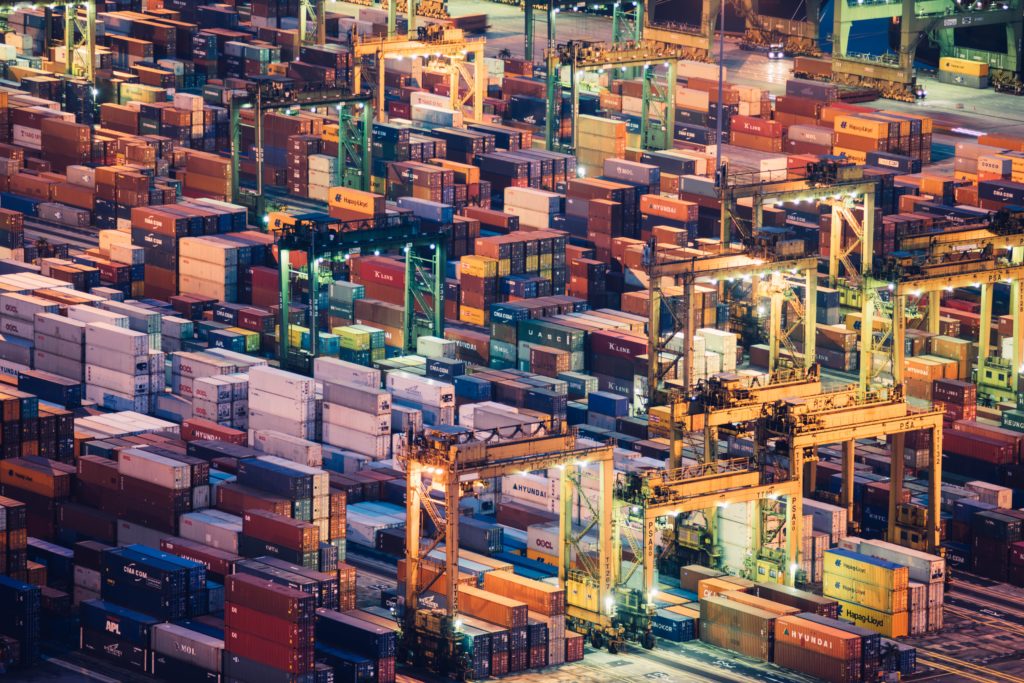
President Trump’s tariffs on foreign imports continue to attract strong reactions from China, the European Union and other US trading partners. This is perfectly understandable given the tariffs threaten to weaken the economic livelihood of those places.
As can be expected, share markets have taken these factors into account. Starting on 30 August 2018, the ASX200 fell for 8 consecutive days and lost about 3.5% in total. Is it time to sell shares and buy bonds, cash, gold or Bitcoin? These are the types of questions that many investors begin to ask themselves when the prices of publicly listed companies begin to exhibit the types of swings that we have seen recently. And it’s only natural. Volatility – especially when it’s downward – makes us worry about the safety of our investments. But the answer to the two questions above is generally ‘no’. Reacting after the event of declines in prices will typically not increase the value of your portfolio over the long term.
Whilst past evidence suggests that geopolitical events do not have a long-term impact on global financial markets, it is still worth understanding the nature of these events and keeping an eye on them.
What is a tariff?
A tariff is a tax on goods that enter a country. Tariffs provide a revenue stream for the government, yet when applied in the wrong way, they can stem the flow of imported products by making the cost of imported goods more expensive for the consumer.
Many countries, including Australia, have tariffs in place. This goes some way to explain why many products we buy here are more expensive than the identical product bought overseas, e.g. in the USA.
Tariffs can be used to help protect local manufacturers by inflating the price of an imported product. But that’s not always the case. For example, Australia still has a tariff on imported cars, even though we no longer have a car manufacturing industry. And we have a 25% tariff on bed sheets. Why? I guess because it is a relatively easy way for the government to collect revenue as we are all going to have to replace our cars and bedsheets one day.
Just because a country, like Australia, has tariffs in place, doesn’t mean that a trade war will emerge.
What is a trade war?
A trade war is where two or more countries impose barriers to trade with each other – through import tariffs or quotas – which escalates into a tit-for-tat.
As you would imagine, in a trade war the barriers imposed are sufficiently large in terms of their size and the proportion of imports covered to create a costly tax on the trade partner.
Do tariffs work?
Depends on who you ask. Many economists feel that over time, the costs outweigh the benefits.
Here’s a great snippet on this issue from Shane Oliver, Chief Economist of AMP Capital:
“A basic concept in economics is comparative advantage: that if Country A and B are both equally good at making Product X but Country B is best at making Product Y then they will be best off if A makes X and B makes Y. Put simply, free trade leads to higher living standards and lower prices whereas restrictions on trade lead to lower living standards and higher prices.”
If we consider the broader economic impacts, it seems to be that tariffs don’t stack up, especially in countries where disposable household income is scarce.
Take the USA right now for example; many consumers don’t have the savings to buy the new iPhone X, yet they go and buy it on credit anyway. President Trump would like to see the iPhone made in the USA so he plans to put a tariff on iPhones ((it’s hard to know what this actually means but such is the difficulty of understanding complex economic policy announced in tweets limited to 144 characters).
If Apple could make the iPhone in the USA at a lower cost than making them overseas, they would already do it. But they can’t. So the cost of the iPhone will go up if President Trump has his way. This begs the question, how many US consumers will be happy to pay more for a phone they can’t afford just because the phone is now made in a neighbouring state? My guess? Not many.
As Shane Oliver says, “if you want to support your country’s products – buy them. But trade barriers don’t work.”
What should investors do?
Periods of heightened uncertainty can create turmoil in share markets. This can be unsettling, so it’s valuable to remember these 3 things:
- Price fluctuations in share markets are normal. We don’t know when they will occur nor how deep they may be but what we do know is that over the long run, shares provide higher returns than lower risk investments such as cash and bonds.
- Selling out of shares at ‘the right time’ is difficult to get right once and virtually impossible to do on a repeated basis. Many have tried (the author included) but it is just not possible to repeatedly time markets with any measurable success.
- By all means read, listen and learn, but try not to take any action which can harm your investment returns.
In periods of economic uncertainty, it can seem that negative news is everywhere and that the only way is down, which can make it hard to stay calm. My advice? Give me a call and we can go over your well-considered plan and why your investments are designed to help minimise long-term risk and allow you to focus on the things that really matter in your life (hint – US economic policy is not one of them).
What Can Align Financial Do For You? Visit our homepage to learn more about our service. If you would like to speak to us about your financial circumstance, please feel free to give us a call on 02 9913 9995. We are located in Narrabeen on the Northern Beaches of Sydney.
Disclaimer: This post has been prepared for general information purposes only. It is not specific advice to any particular person. You should consult an authorised Align Financial adviser before making financial decisions. Align Financial | Financial Planner Northern Beaches | Servicing North Narrabeen, Narrabeen, Mona Vale, Elanora Heights, Newport, Avalon, Palm Beach | Enquire with us online.
